Instagram
 YouTube
 Facebook
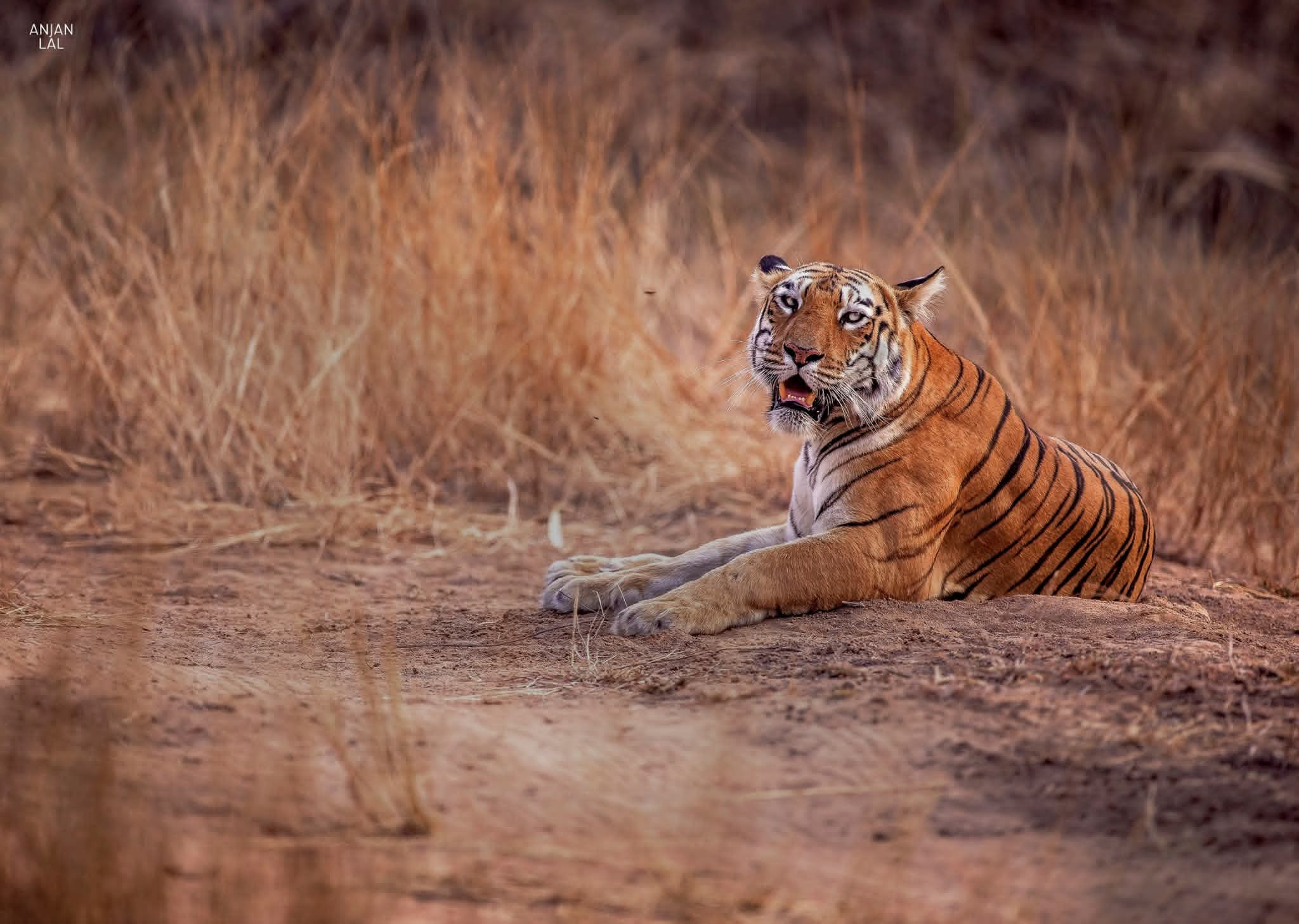
MAYA
The Tigress Who Disappeared
There are tigers that become famous because people see them.
And then there are tigers that become something more.
A memory.
A story.
A name that stays in the forest long after the animal itself is no longer seen.
In Tadoba, that name is Maya.
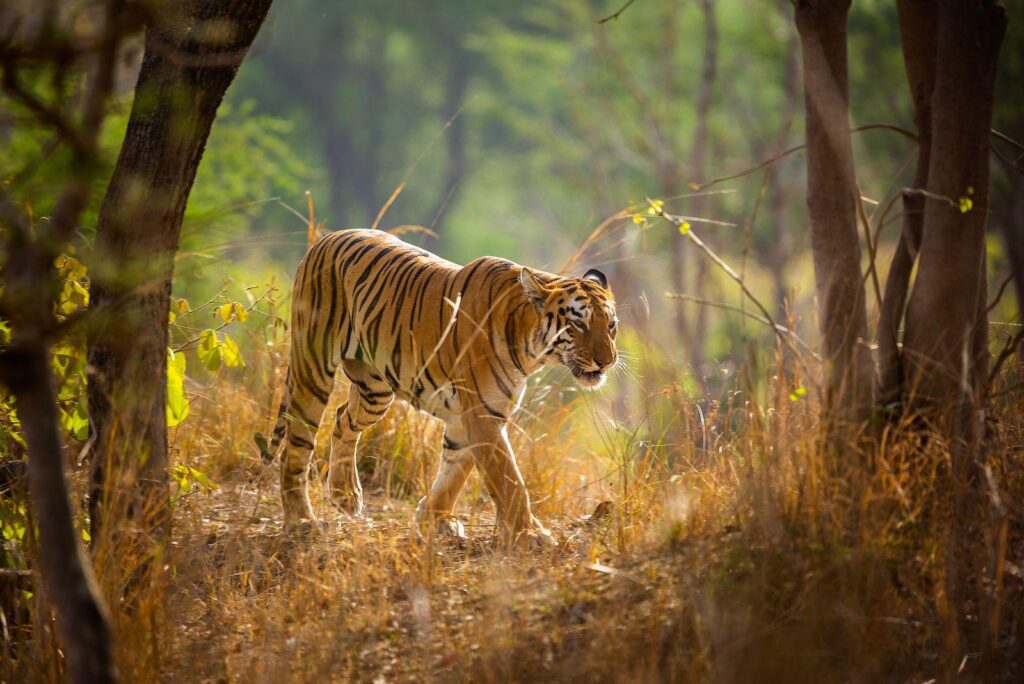
For more than a decade, she lived beneath the teak and bamboo of the Tadoba-Andhari Tiger Reserve. She raised cubs, defended territory, faced rival males, crossed safari tracks and walked past hundreds of watching eyes with a calmness that made her seem almost untouched by the world around her.
She became one of the most recognisable tigresses in India.
And then, in August 2023, Maya disappeared.
No carcass.
No confirmed sighting.
No final photograph.
No answer.
Just silence.
And perhaps that is why her story still feels unfinished.
Before She Was Maya
Maya was born in 2010 in Tadoba.
Before the name Maya became known across the wildlife world, she was simply a cub moving through the forest with her mother, Leela.
Her early life was not destined to be easy.
She was orphaned young, before she had fully grown into independence. Yet she survived.
Somehow, she learned the rules of the forest.
Where to find water.
Where prey moved.
How to navigate territory.
When to disappear.
When to stand her ground.
And slowly, the little cub became a tigress.
The forest that had once been something she followed became something she owned.
Maya had arrived.
The Queen of Pandharpauni
Maya eventually established herself around the Pandharpauni landscape, becoming one of Tadoba’s most recognisable tigresses.
She was identified as T-12, but to the people who followed her, the number hardly mattered.
She was Maya.
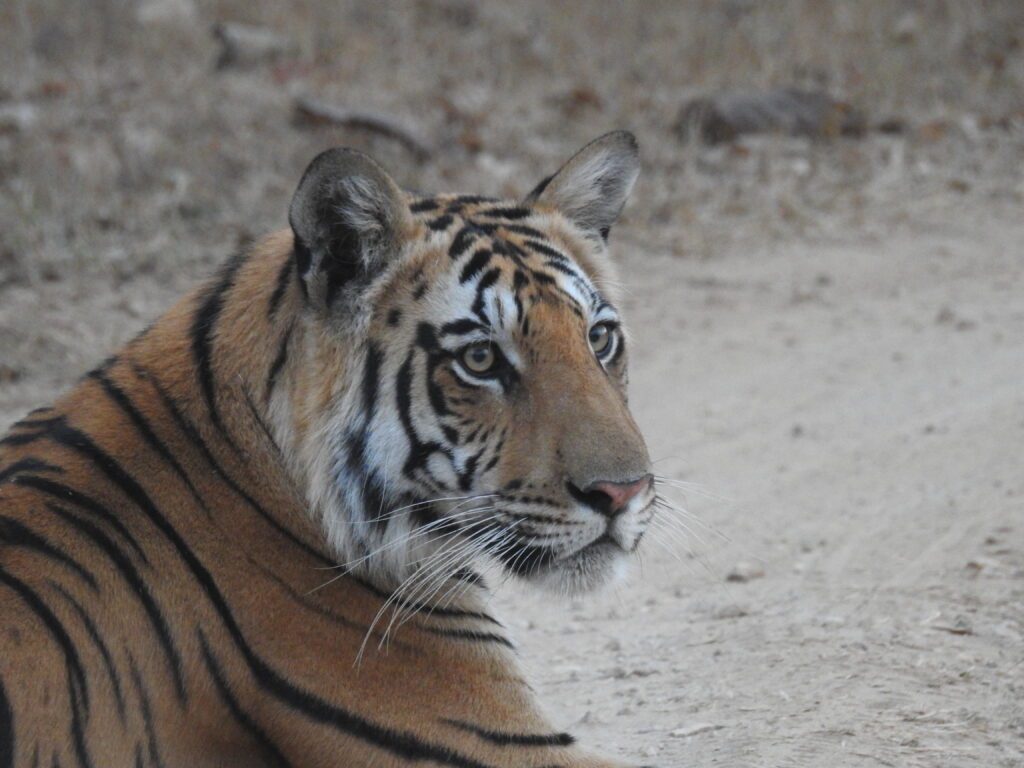
Her name reportedly came from the distinctive marking around her neck — an “M” that became one of the ways observers identified her.
Over the years, Maya developed something unusual.
A reputation.
She was bold.
She was comfortable around safari vehicles.
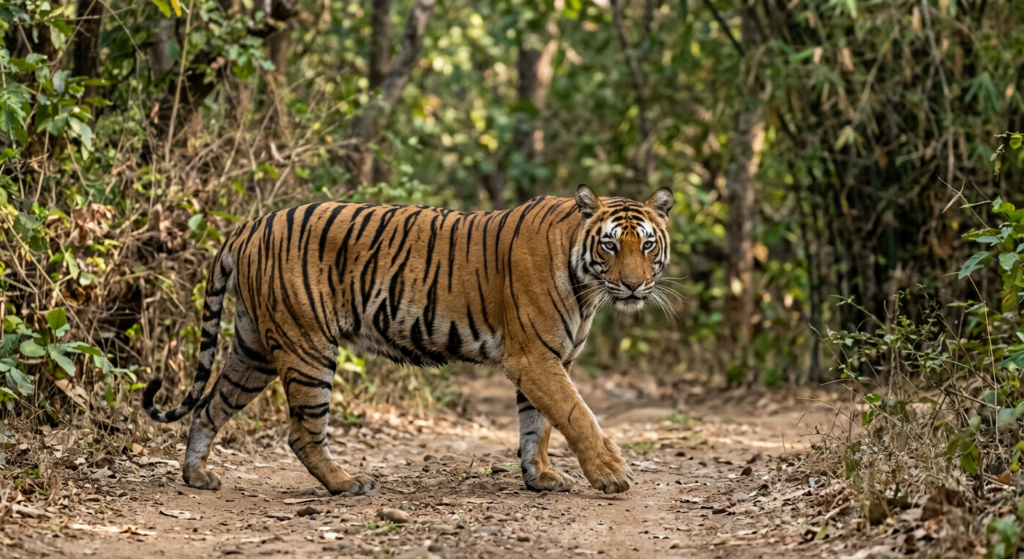
She would sometimes walk along roads with jeeps watching her from either side.
She could cross in front of vehicles without appearing particularly bothered by the attention.
For the people sitting inside those vehicles, those encounters could feel almost surreal.
You weren’t simply watching a tiger.
You were watching Maya.
A Tigress Surrounded by Tigers
Maya’s territory was never a quiet kingdom.
Male tigers came and went.
Some stayed.
Some challenged.
Some disappeared.
Her territory overlapped with the territories of powerful males, and her life was constantly intertwined with the complicated social world of wild tigers.
One of the most famous males associated with Maya was Matkasur.
Their story became one of the most talked-about chapters of Tadoba’s tiger history.
Maya was a mother.
And motherhood in the tiger world is not gentle.
It is dangerous.
Cubs are vulnerable to rival males, predators and territorial conflict. A tigress must keep them hidden, move them constantly and protect them while also finding enough food to survive herself.
Maya’s story was filled with this tension.
She raised cubs.
She lost cubs.
She separated from growing cubs.
She had new litters.
And each time, the cycle began again.
The Mother
Perhaps the most powerful part of Maya’s story was not her fame.
It was her life as a mother.
Over the years, Maya raised multiple litters and contributed generations of tigers to Tadoba.
There were moments of tenderness.
Cubs following her through the forest.
Cubs playing near water.
Cubs learning how to move.
Cubs learning the first lessons of being a tiger.
And there were moments of danger.
In 2016, for example, reports described Maya separating from three older cubs amid the presence of male tigers, with concerns that the cubs could be at risk. The behaviour was interpreted by wildlife observers as part of the complex way tigresses protect young cubs from potentially dangerous males.
To someone watching from a safari vehicle, it might have looked like abandonment.
To Maya, it was survival.
The jungle does not always allow a mother to protect her children by staying beside them.
Sometimes protecting them means leaving them.
The Tiger Who Stopped for the World
Maya became extraordinarily well known.
Photographers followed her.
Naturalists studied her.
Tourists asked for her.
Safari guides knew her movements.
Stories about her travelled far beyond Tadoba.
There was something almost cinematic about the way she moved through the forest.
She could walk past a line of safari vehicles with the confidence of an animal that knew exactly where it belonged.
One account from a wildlife observer describes Maya walking so close to a jeep that the observer felt he could almost reach out and touch her.
Of course, that closeness was never tame.
Maya was not a captive animal.
She was not performing.
She simply tolerated the strange machines that had become part of the landscape she inhabited.
That distinction matters.
Because the magic of Maya was precisely that she remained wild.
The Forest Had Its Own Stories About Her
Over the years, stories accumulated.
A hunt.
A cub.
A rival male.
A fight.
A waterhole.
A sudden appearance on a safari road.
A disappearance into bamboo.
One encounter became another story.
Another photograph became another memory.
And eventually, Maya became more than an individual tigress.
She became part of Tadoba itself.
For many people, Tadoba meant Maya.
And for others, Maya was their reason for entering Tadoba.
The strange thing about that fame is that Maya never asked for it.
She was simply living.
Hunting.
Walking.
Raising cubs.
Defending her territory.
Doing what a tiger does.
Humans were the ones who turned her life into a story.
And Then She Was Gone
In August 2023, Maya was seen for the last time.
She was reportedly sighted on 23 August 2023 near Panchdhara, close to Tadoba Lake. After that, the sightings stopped.
At first, perhaps, nobody panicked.
Tigers disappear.
They move.
They change territories.
They spend days hidden.
A forest is enormous.
But days became weeks.
Weeks became months.
And Maya did not return.
For a tigress who had been observed so frequently, the silence became impossible to ignore.
The forest department began searching her territory, including physical and digital searches, as concern grew among tourists, conservationists and those who had followed her for years.
People began asking the same question.
Where is Maya?
The Bones
Then came what seemed like an answer.
Skeletal remains were found in Maya’s area.
For a moment, the mystery appeared to be over.
Perhaps this was how the story ended.
Perhaps Maya had died somewhere deep inside the forest, away from the roads and cameras.
The remains were sent for DNA analysis.
And then came the result.
The tested bone was not Maya’s.
It belonged to a sambar deer.
The discovery did something strange to the story.
Instead of providing an ending, it took the ending away.
The search had found something.
But it had not found Maya.
Where Did Maya Go?
That is the question that remains.
There are possibilities.
She could have died somewhere that has never been discovered.
She could have been killed in a territorial conflict.
She could have moved farther than anyone expected.
Or there could be another explanation entirely.
But there is no confirmed answer.
And that uncertainty is important.
Maya’s disappearance has generated theories and speculation, but speculation is not evidence.
What is known is much simpler:
Maya was seen in August 2023.
She was not seen again.
A later DNA test ruled out the remains that had raised hopes of identifying her.
And the forest never gave up the rest of the story.
The Last Photograph
There is something haunting about a final photograph of a wild animal.
At the time, nobody knows it is the last.
The person behind the camera does not know.
The guide does not know.
The tourists certainly do not know.
Everyone assumes there will be another day.
Another safari.
Another sighting.
Another chance.
With Maya, there wasn’t.
And that is perhaps the cruelest thing about her story.
There was no goodbye.
No dramatic final scene.
No final roar echoing through the forest.
She simply stopped appearing.
One day, she was part of Tadoba.
Then she wasn’t.
But Maya Didn’t Really Disappear
Because a tiger’s life is never measured only by the years it spends alive.
It is measured by what it leaves behind.
And Maya left behind a lot.
She left cubs.
She left descendants.
She left photographs.
She left stories.
She left memories in the minds of thousands of people who had watched her walk past their safari vehicles.
She left an entire generation of naturalists with stories about a tigress who seemed to possess a personality of her own.
And she left something even harder to define.
A feeling.
Ask someone who saw Maya what they remember, and it may not be the photograph.
It may be the silence inside the jeep.
The moment everyone stopped breathing.
The way she looked towards the vehicle.
The sound of cameras clicking.
The way she walked away.
The feeling that, for a few seconds, you had been allowed into her world.
The Mystery Remains
Today, Maya’s name still exists in Tadoba.
Not because anyone knows exactly where she is.
But because nobody ever found the end of her story.
Perhaps that is why her disappearance feels different from the death of a tiger whose body is found.
There is no certainty.
Only memories.
Only old photographs.
Only stories passed between guides and naturalists.
Only the tracks she once left behind.
And somewhere inside the enormous silence of Tadoba, one question remains unanswered.
What happened to Maya?
Maybe the forest knows.
Maybe it always has.
But forests don’t answer questions in the way humans want them to.
They keep their secrets.
Maya
She was born in Tadoba.
She grew up without her mother.
She survived.
She claimed a territory.
She became a mother.
She raised cubs.
She faced rivals.
She became one of India’s most recognisable tigresses.
And then, after more than a decade in the forest, she disappeared.
No confirmed final sighting.
No confirmed remains.
No final goodbye.
Just the forest.
And the memory of a tigress named Maya.
Perhaps that is the most fitting ending there can be.
Because Maya belonged to the wild.
And the wild does not always give us closure.
Sometimes it gives us a story.
Sometimes it gives us a memory.
And sometimes…
it leaves us wondering.
The Wild Phase
At The Wild Phase, we don’t believe the jungle exists simply for us to find its tigers.
We believe in experiencing the stories that unfold around them.
Because every tiger has a story.
And sometimes, the most powerful stories are the ones the forest refuses to finish.
I recently booked a last-minute trip and I could not be happier with the experience. The team found a great deal, handled every detail and made everything easy from transportation to booking tours.
aya's story remains unfinished. A tigress who lived, hunted, raised cubs and became a symbol of Tadoba simply disappeared one day, leaving behind photographs, memories and questions that the forest has never answered.
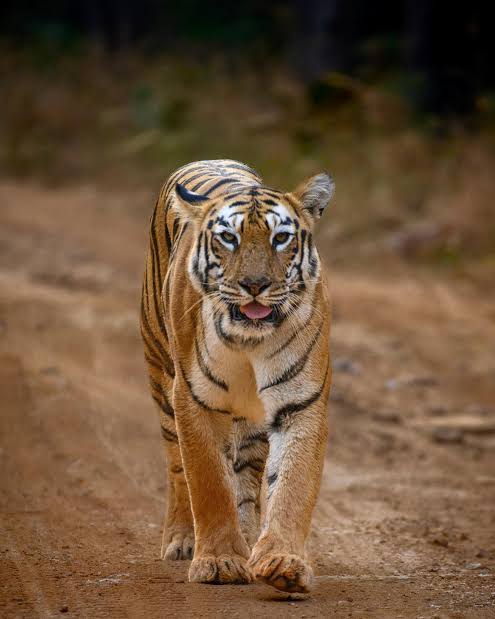
The Legacy of Maya
Maya may no longer be seen in the forests of Tadoba, but her story continues through the cubs she raised, the people who witnessed her, and the memories she left behind. Her disappearance remains one of Tadoba's enduring mysteries - a reminder that in the wild, not every story comes with an ending.