Instagram
 YouTube
 Facebook
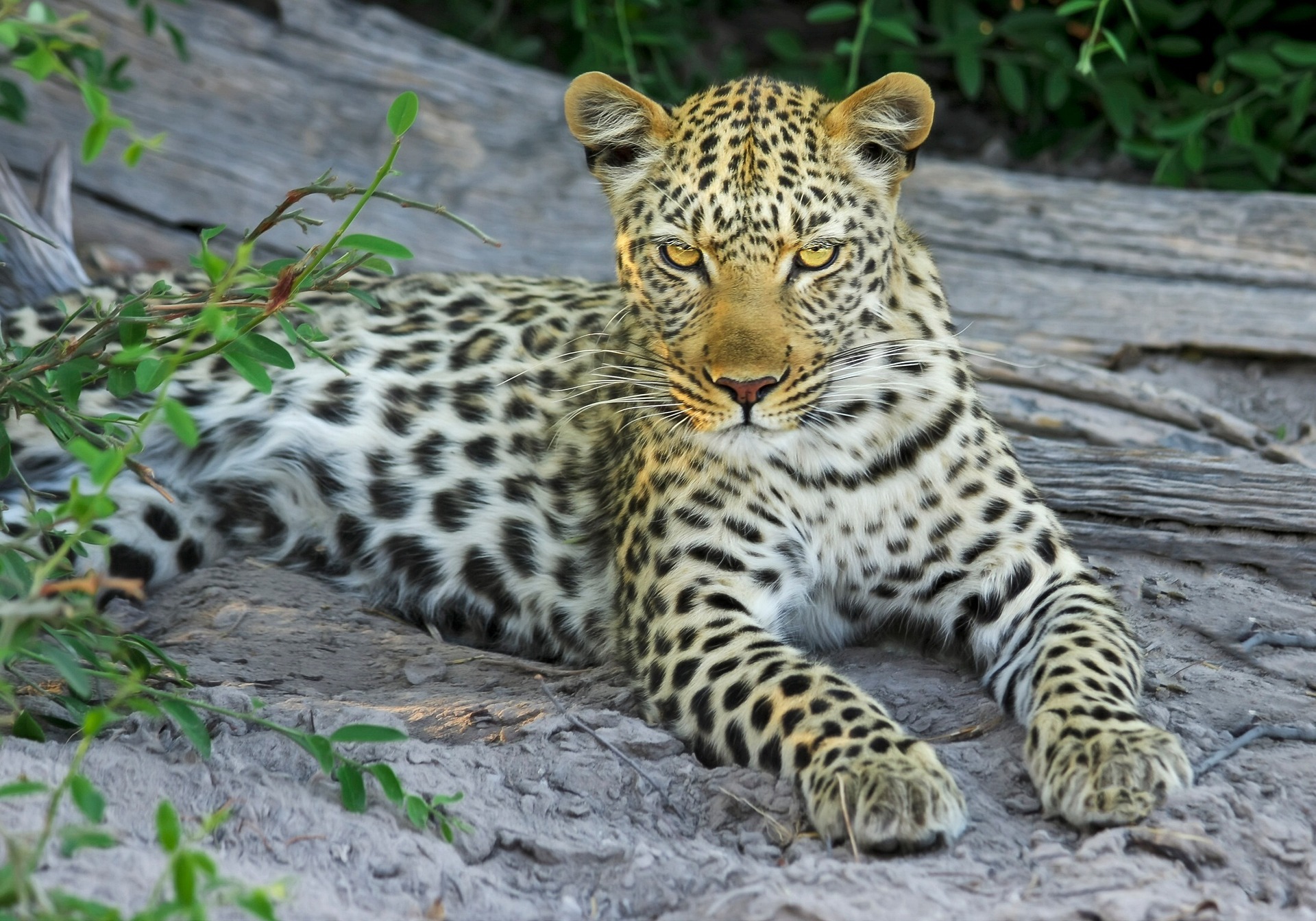
THE LEOPARDS OF MUMBAI
Where the jungle meets the city, and the wild learns to live beside us.
There are few cities in the world where you can wake up to the sound of traffic, watch the skyline fill with concrete, and still be living within the territory of a leopard.
Mumbai is one of them.
Hidden behind the city’s roads, buildings and relentless movement lies a landscape that feels almost impossible for a metropolis of this size — Sanjay Gandhi National Park.
Spread across the northern edge of Mumbai, the park is one of the most remarkable pockets of wilderness in an urban landscape. And somewhere within its forests, rocky hills and dense vegetation, leopards move quietly through the shadows.
They have been here long before the city expanded around them.
And remarkably, they are still here.
THE CITY’S MOST UNSEEN NEIGHBOURS
Mumbai’s leopards are not the leopards most people imagine.
There are no endless grasslands here.
No remote forests stretching for hundreds of kilometres.
Instead, their world is surrounded by highways, apartment buildings, railway tracks, temples and some of the most densely populated neighbourhoods in India.
Yet the leopard has adapted.
It is one of the most adaptable large predators on the planet, and Mumbai offers an extraordinary example of that adaptability.
During the day, a leopard may remain hidden in thick vegetation or rocky terrain.
When the city becomes quieter, it may begin to move.
A wall.
A drainage channel.
A forest trail.
A patch of scrub.
Sometimes, even the edge of a human settlement.
The leopard doesn’t need the city to disappear.
It has simply learned how to live around it.
A FOREST INSIDE A MEGACITY
Sanjay Gandhi National Park is unusual even by Indian wildlife standards.
It is a protected forest surrounded by one of the world’s largest urban agglomerations.
Inside its boundaries are forests, grasslands, streams, caves and rocky hills.
For the leopard, this landscape provides something essential:
cover.
But habitat alone isn’t enough.
A predator needs prey.
And Mumbai’s forest supports a surprising variety of animals — including chital, wild boar, langurs, macaques and other species that form part of the leopard’s prey base.
This is what makes the leopard’s presence here so fascinating.
It isn’t surviving simply because a forest happens to exist.
It is surviving because an entire ecosystem still functions within the city.
THE LEOPARD DOESN’T NEED TO BE SEEN
Perhaps the most interesting thing about Mumbai’s leopards is how rarely they reveal themselves.
A leopard is built for secrecy.
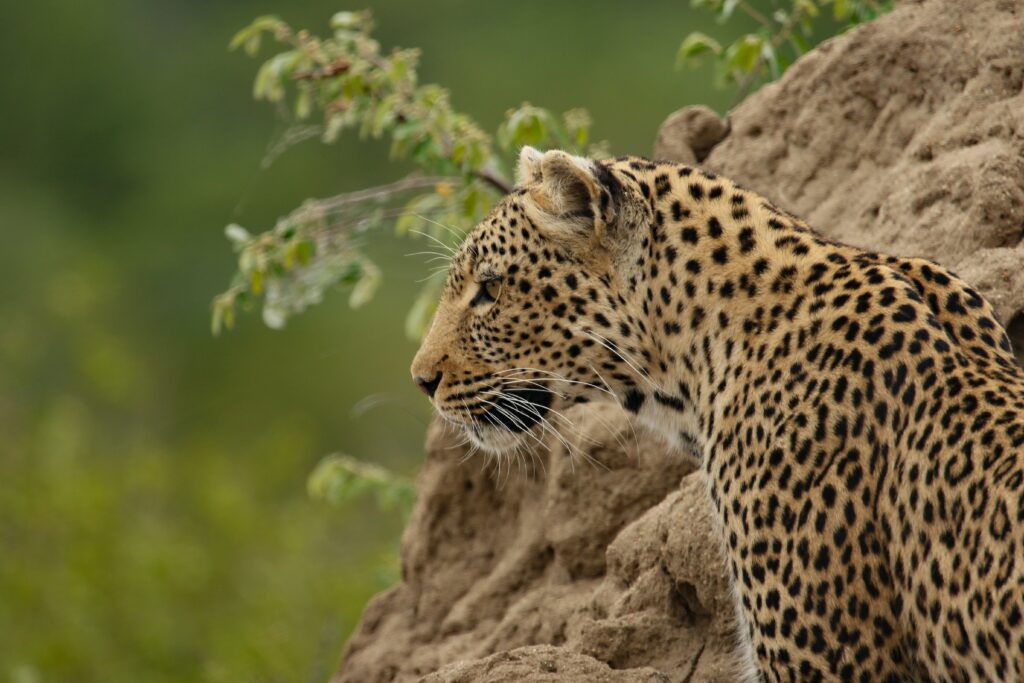
Its rosette-covered coat breaks up its outline among leaves, rocks and shadows. It can move through dense vegetation with remarkably little sound.
And unlike animals that announce their presence, the leopard often does the opposite.
It disappears.
For wildlife enthusiasts, this changes the meaning of a sighting.
A leopard appearing on a safari isn’t just a photograph.
It is a brief moment when two worlds overlap.
For a few seconds, the forest gives something away.
Then it takes it back.
AFTER DARK
As Mumbai’s streets continue glowing late into the night, another Mumbai begins to move.
This is when the leopard may become active.
The sounds are different.
The roads are quieter.
The forest becomes darker.
And an animal that spent much of the day concealed begins travelling through its territory.
Leopards are primarily nocturnal and crepuscular animals, meaning they are often most active around dusk, dawn and during the night.
Their ability to operate during these quieter hours is one of the reasons they can coexist with such a large human population.
They don’t need to compete with us for every moment of the day.
They simply use the hours when the city is looking elsewhere.
LIVING BETWEEN TWO WORLDS
But this coexistence isn’t always simple.
Mumbai’s leopard story is also a story about conflict.
As cities expand and natural habitats become fragmented, encounters between people and wildlife can become more frequent.
Leopards may cross roads, move along the edges of settlements or pass through areas where people live and work.
When that happens, fear can quickly replace curiosity.
But understanding the animal changes the conversation.
A leopard isn’t entering a city because it suddenly decided to become an urban animal.
In many cases, the city has expanded into landscapes that wildlife already used.
That doesn’t make every encounter harmless.
It simply reminds us that coexistence requires understanding, responsible behaviour and effective conservation.
THE LEOPARD AS AN INDICATOR
There is another reason Mumbai’s leopards matter.
A large predator surviving within a megacity tells us something about the ecosystem around it.
A leopard needs food.
Its prey needs vegetation and habitat.
Those habitats need water.
And the entire system needs enough space to function.
In that sense, the leopard becomes more than just a charismatic animal.
It becomes a reminder that wilderness doesn’t always exist somewhere far away.
Sometimes, it exists right beside us.
NOT JUST A LEOPARD
This is perhaps the most important lesson Mumbai’s forests can teach us.
When people enter a forest looking only for a leopard, they can easily miss everything else.
The alarm call of a langur.
The sudden movement in the grass.
A chital staring into the trees.
A bird calling from somewhere unseen.
The tracks left behind on a trail.
The silence before something moves.
The forest is never only about the animal we came looking for.
And sometimes, the things we weren’t searching for become the moments we remember most.
MUMBAI’S WILD SIDE
Mumbai is often described through its skyline.
Its trains.
Its traffic.
Its nightlife.
Its coastline.
But there is another Mumbai.
One covered in green.
One that wakes before the city.
One where the rules are written by seasons, prey, predators and survival.
And somewhere inside that world, a leopard walks through the darkness.
No announcement.
No spotlight.
No audience.
Just another night in Mumbai.
And perhaps that is what makes the city’s leopards so extraordinary.
They don’t need to leave the city to remain wild.
They have simply found a way to make the wild their home.
THE WILD PHASE
Wildlife isn’t always found where the city ends.
Sometimes, you just have to look a little closer.
I recently booked a last-minute trip and I could not be happier with the experience. The team found a great deal, handled every detail and made everything easy from transportation to booking tours.
Mumbai is home to one of the most remarkable examples of urban wildlife in India. Within the forests of Sanjay Gandhi National Park, leopards continue to move through a landscape surrounded by one of the world’s busiest cities. These elusive predators have adapted to an ever-changing environment, finding food, shelter and space remarkably close to millions of people.
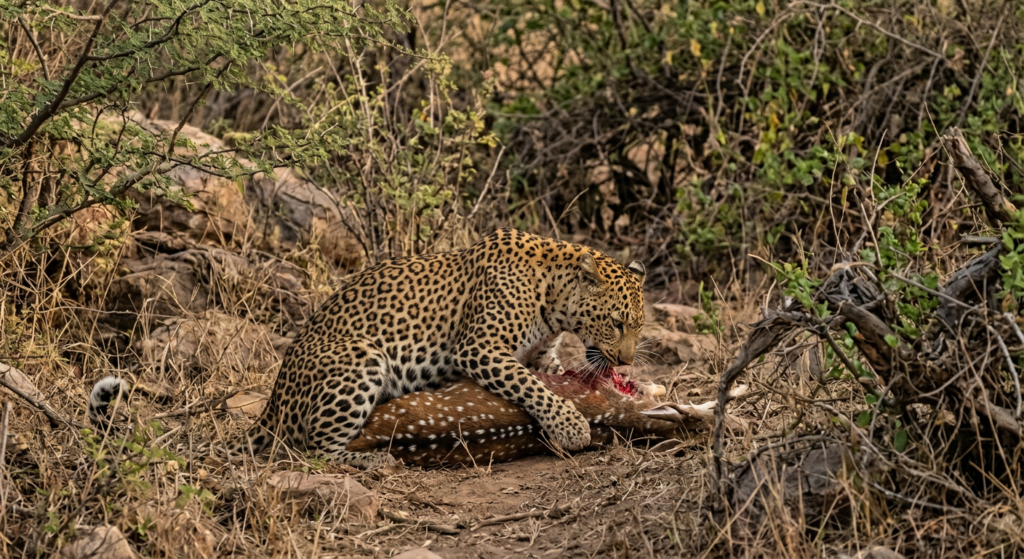
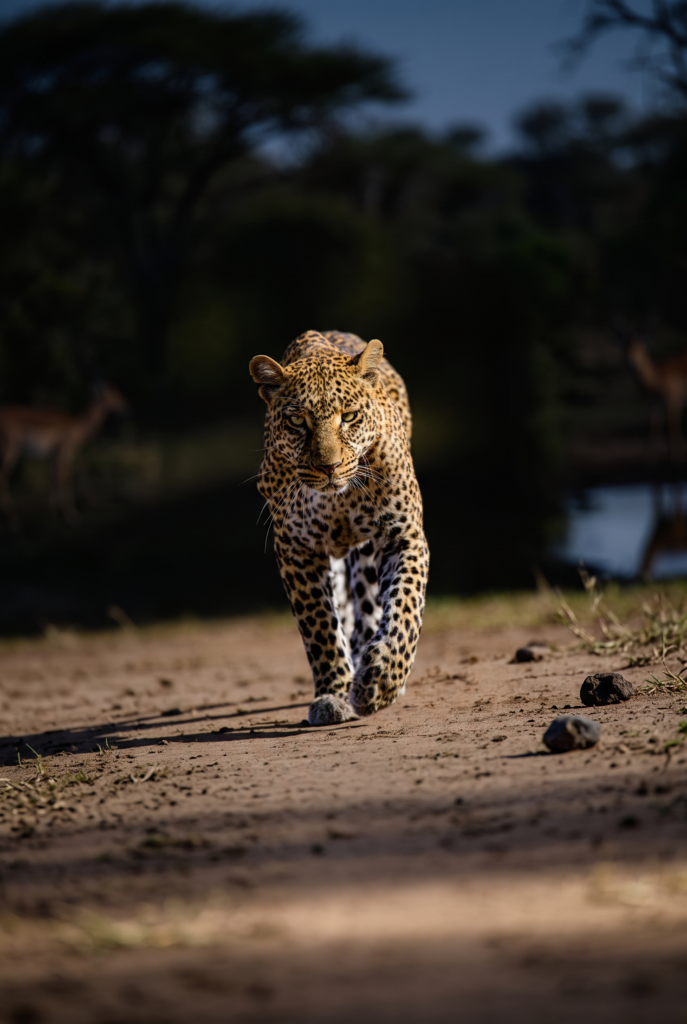
The Leopards of Mumbai
Mumbai’s leopards are more than just a symbol of the city’s wild side. They are a reminder that wilderness can exist much closer than we imagine. From the dense forests and rocky hills of Sanjay Gandhi National Park to the edges of human settlements, these elusive cats have learned to navigate a landscape where the urban and the wild constantly meet.
Their story is not simply about spotting a leopard. It is about understanding the forest around it — the prey, the alarm calls, the tracks, the silence and the countless moments that usually go unnoticed. Because when we enter the jungle looking only for a leopard, we may miss everything else that makes the forest alive.
Mumbai’s leopard is proof that the wild does not always disappear when a city grows around it. Sometimes, it simply learns a new way to survive.