Instagram
 YouTube
 Facebook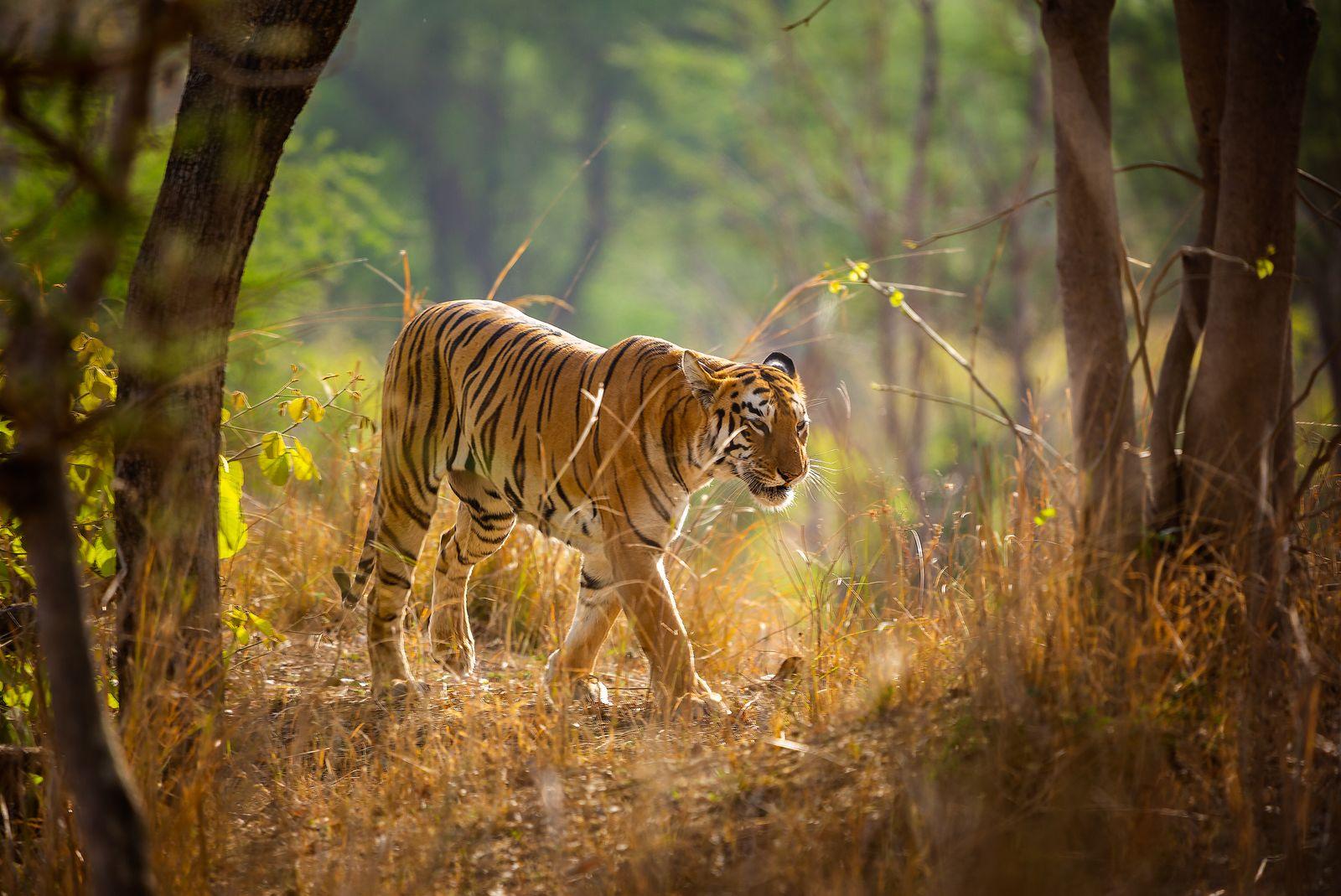
The Forest Never Sleeps: Secrets of India’s Wild Heart
Beyond the tiger sightings, beyond the safari trails, lies a world that most people never truly learn to see.
Imagine this.
It is 5:45 AM. The sky is still painted in shades of blue and grey. A thin layer of mist hangs between ancient trees, the air smells of damp soil, and somewhere in the distance, a bird lets out a sharp, unfamiliar call.
Your safari vehicle slows down.
The guide switches off the engine.
Nobody speaks.
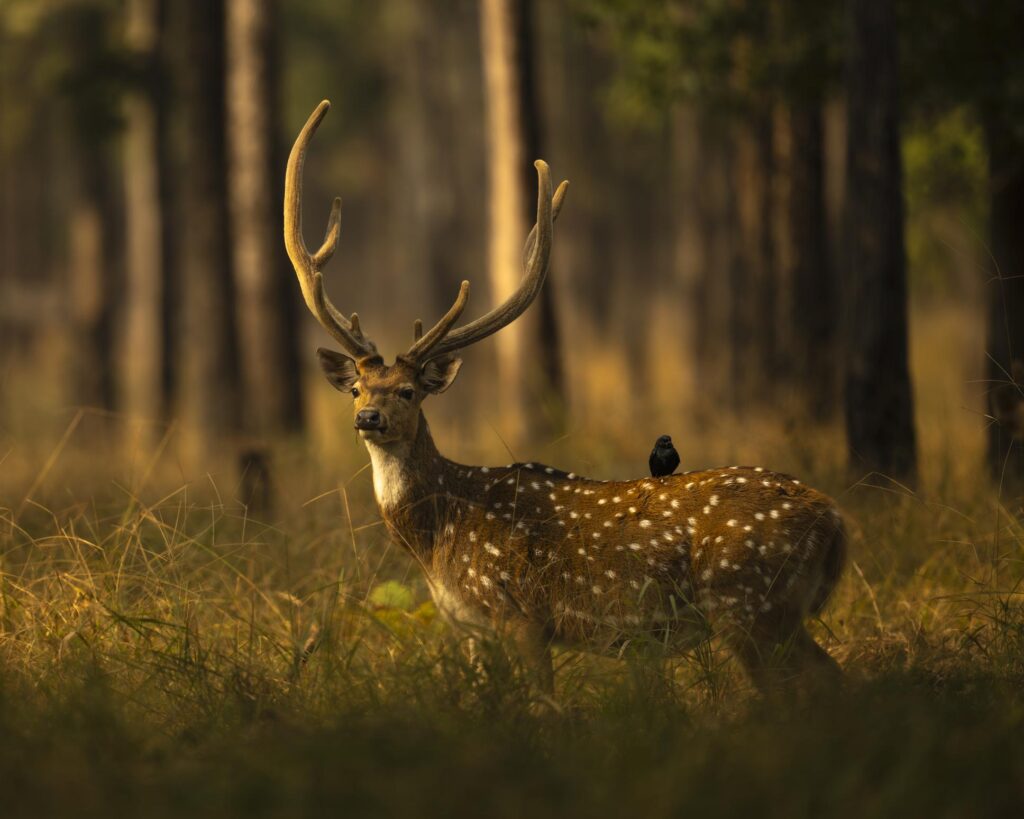
A few seconds later, a chital deer raises its head. A langur sitting high in a tree begins calling frantically. The birds grow restless. Your guide looks towards the dense undergrowth, listening carefully.
Something is moving through the forest.
You cannot see it. You do not know where it is. But suddenly, the entire jungle seems aware of its presence.
And then comes the question every wildlife enthusiast has asked at least once:
Is there a tiger nearby?
Welcome to the forests of India, where some of the most extraordinary stories unfold without a single word being spoken.
1. The jungle has its own language
Most people enter a forest looking for animals. Experienced naturalists enter listening for them.
In India’s forests, sounds can reveal what the eyes cannot. A sudden alarm call from a deer, the persistent warning cries of a langur, or a change in the behaviour of birds can alert an observant guide to the possible presence of a predator.
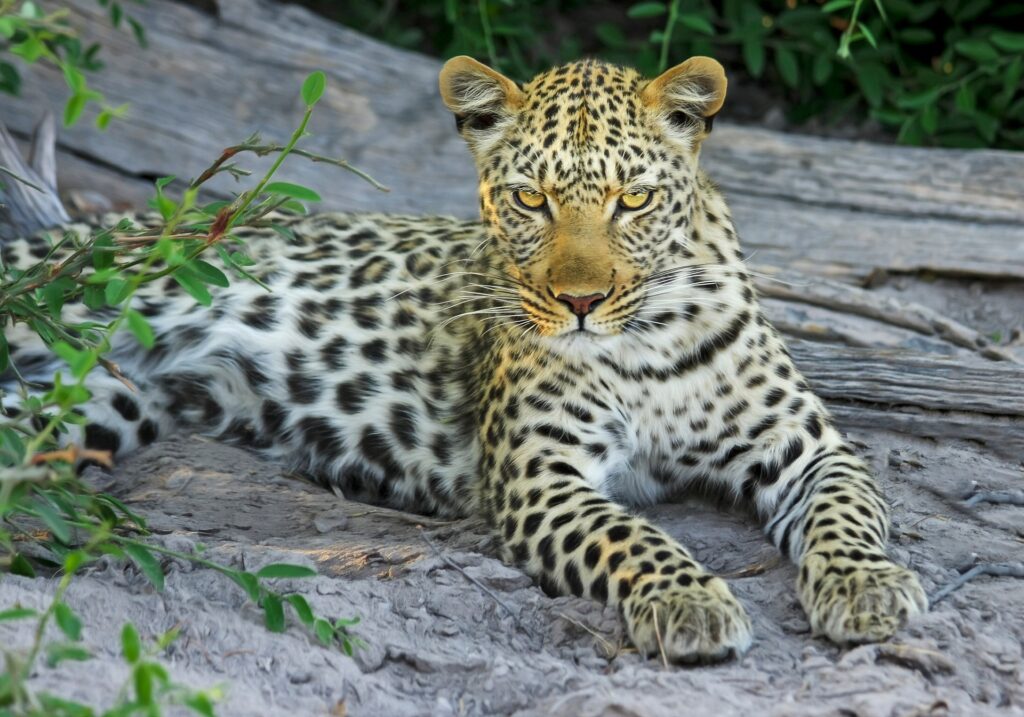
These calls are not a guarantee that a tiger is nearby. Animals may react to leopards and other threats, too. But to someone who understands the forest, they are valuable clues.
Consider the racket-tailed drongo, a remarkable bird known for mimicking the calls of other species. It can even take advantage of the reactions its deceptive calls provoke. In a world where survival depends on awareness, sound can be both a warning system and a clever trick.
Suddenly, a safari becomes something more than a search for wildlife.
You begin reading the forest.
A fresh pugmark in the dust. Broken grass beside a trail. Scratches on a tree. A bird that has abruptly stopped singing.
Each detail becomes a clue. Each silence becomes a question.
And the most exciting part? You might never see the animal responsible for any of it.
2. Tadoba: Where the heat belongs to the wild
Maharashtra’s Tadoba-Andhari Tiger Reserve is one of India’s best-known destinations for experiencing the wilderness of Central India. Its dry deciduous forests, bamboo thickets, water bodies and grasslands support an extraordinary variety of wildlife. Source: Maharashtra Tourism
But Tadoba is not just about its famous striped residents.
Imagine a summer afternoon. The forest is hot, the earth is dry, and the shade beneath a tree becomes precious. A sambar deer approaches a waterhole cautiously. A crocodile lies almost motionless near the water’s edge. Above them, birds move between branches, while somewhere beyond the visible trail, a sloth bear searches for food.
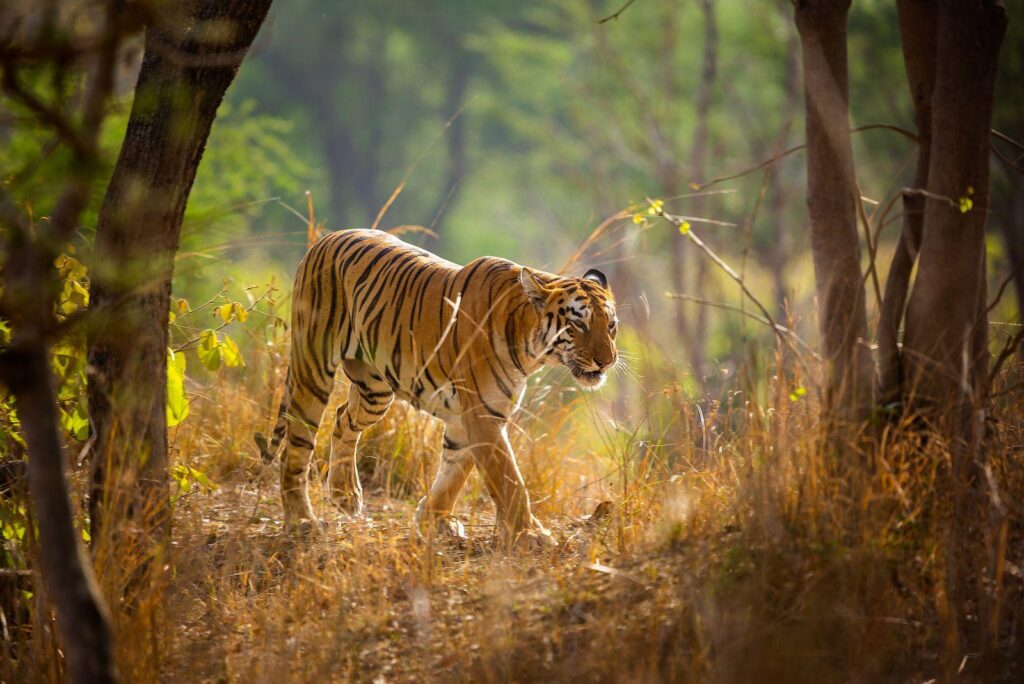
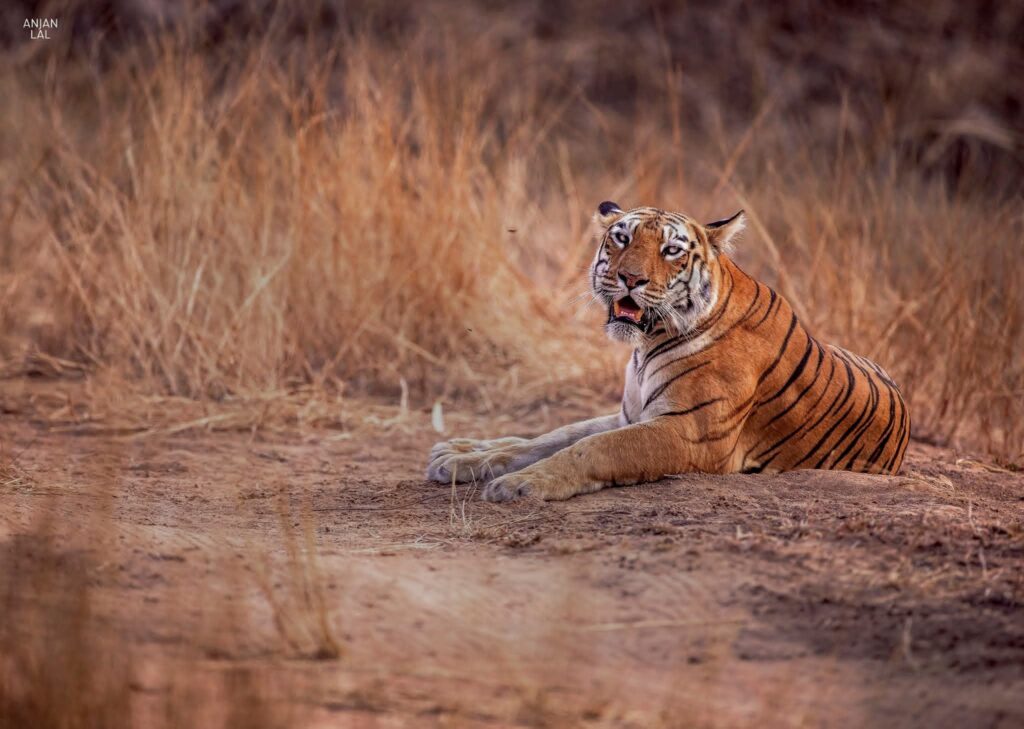
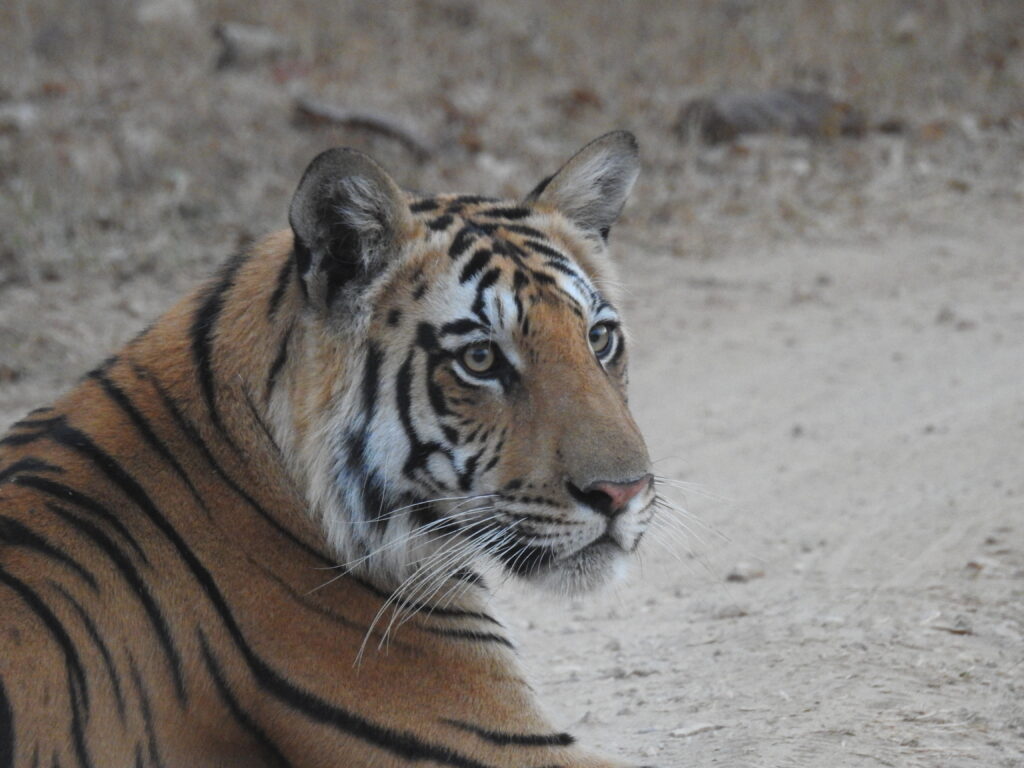
Then, from the edge of the forest, a tiger emerges.
For a moment, everything else seems to disappear.
Its striped coat breaks up its outline among the shadows. Its movements are unhurried. It does not perform for the cameras or acknowledge the people watching from their vehicles.
It simply exists, entirely on its own terms.
That is the magic of a genuine wildlife encounter. You are not watching a show. You are being allowed a brief glimpse into another animal’s life.
And even if the tiger never appears, Tadoba has stories everywhere: the powerful Indian gaur, the elusive leopard, the energetic dhole, the fascinating birds and the countless smaller creatures that keep the forest functioning.
The tiger may be the headline, but the forest is the entire story.
3. India’s forests are not all the same
One of the most fascinating things about India is that the word forest describes several remarkably different worlds.
The sal forests of Kanha
In Madhya Pradesh, the forests and open grasslands of Kanha create a landscape of shifting light, towering trees and clearings where herbivores graze. Here, the barasingha, or swamp deer, represents an important conservation success story. Kanha reminds us that protecting wildlife means protecting entire habitats, not simply one celebrated species.
The rainforests of the Western Ghats
Travel south and the scenery changes. Dense vegetation, dripping leaves, moss-covered trunks and the constant sound of water create a different kind of wilderness. These forests shelter remarkable biodiversity, including endemic amphibians, reptiles, birds and mammals. Sometimes the most extraordinary discovery is not a large animal but a tiny creature perfectly adapted to a world of rain and shadow.
The mangrove maze of the Sundarbans
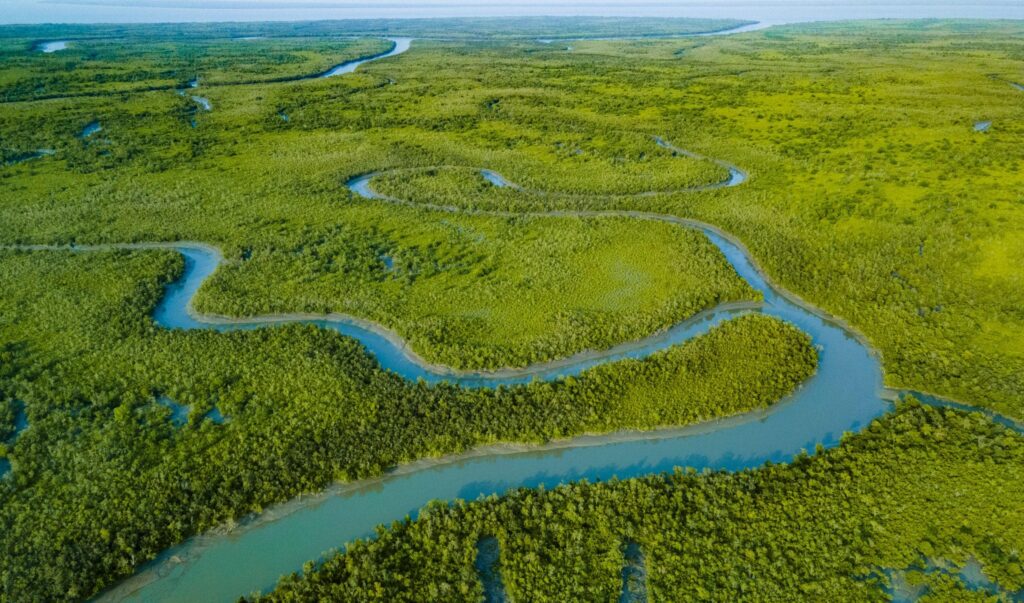
In West Bengal, the forest meets the tide. The Sundarbans, shared by India and Bangladesh, form the world’s largest mangrove forest. Here, roots rise above the mud, waterways twist through the landscape, and the Bengal tiger inhabits a world shaped by salt water and changing tides. Source: UNESCO
This is a wilderness that challenges our usual ideas of what a forest should look like.
The Himalayan forests
In the mountains, forests change with altitude. Broad-leaved trees give way to conifers, the air grows colder, and the landscape becomes increasingly rugged. Depending on the region, these habitats support animals such as Himalayan black bears, red pandas, musk deer and snow leopards in the wider mountain ecosystem.
Four landscapes. Four different rhythms of life.
And yet, they all share one truth: wildlife survives because its habitat works as a whole.
4. The animals you don’t see are part of the adventure
Here is something worth remembering on your next safari.
You can spend an entire morning in a tiger reserve without seeing a tiger and still experience a remarkable day in the wild.
Watch a change in the forest canopy as a bird takes flight. Observe a herd of deer negotiating its way through a clearing. Notice how a mongoose moves through the undergrowth, or how a raptor circles above an open patch of grassland.
Look closely at the forest floor. Ants transport food many times their size. Termites help break down dead plant material. Insects pollinate flowers, and fungi and other decomposers recycle nutrients back into the soil.
These are not side stories. They are part of the machinery that sustains the forest.
A tiger needs prey. Prey needs food and shelter. Vegetation depends on soil, water, pollinators and countless other ecological relationships.
Remove enough pieces from this intricate system, and the consequences spread far beyond the missing species.
The next time someone says a safari was unsuccessful because they did not spot a tiger, ask them a different question:
What did the forest show you?
The answer might surprise them.
5. Why does the forest go silent?
There is a moment that experienced wildlife enthusiasts remember long after the dust from a safari has settled.
The forest goes quiet.
Not necessarily completely silent, but different. The familiar background noise changes. A few animals become alert. The guide pauses, searching for the reason.
Perhaps a predator is nearby. Perhaps an eagle has passed overhead. Perhaps the disturbance has nothing to do with a large animal at all.
The uncertainty is precisely what makes the moment fascinating.
Humans are accustomed to wanting answers immediately. Wildlife teaches us to wait, observe and accept that we cannot always know what is happening.
Sometimes the animal appears.
Sometimes it does not.
Either way, you have witnessed something real: a living ecosystem responding to the world around it.
And that is a privilege that no photograph can entirely reproduce.
6. The uncomfortable truth about wildlife tourism
Forests are beautiful, but they are not playgrounds designed for human entertainment.
Wild animals face pressures from habitat loss, fragmentation, poaching, human-wildlife conflict and changes to their environment. Even responsible tourism needs to be managed carefully to avoid disturbing the wildlife people have travelled to admire.
That is why a responsible safari is about more than securing the perfect photograph.
It means keeping a respectful distance, following the forest department’s rules, never feeding animals, avoiding loud behaviour and accepting that sightings cannot be guaranteed.
It also means recognising the role of local communities, guides, drivers, researchers and conservation workers who help make wildlife protection possible.
A forest is not more valuable because a tiger crossed your path. It is valuable because it continues to support life, including when nobody is watching.
The best wildlife travellers understand that they are visitors.
The forest owes them nothing.
And that is exactly how it should be.
7. The moment you carry home
Long after a safari ends, you may forget the route your vehicle followed. You may forget the name of a particular trail or the number of photographs on your camera.
But you will remember the things that made you feel small in the best possible way.
The first call echoing through the trees before sunrise.
The sight of a herd of deer disappearing into tall grass.
The fresh pugmarks that made everyone in the vehicle lean forward.
The sudden appearance of a wild animal that had been living its life completely unaware of your existence.
Perhaps you will remember a tiger.
Perhaps you will remember a bird.
Or perhaps you will remember sitting quietly in a forest, listening to a world that existed long before you arrived and will hopefully continue long after you leave.
Because the greatest gift of a wildlife expedition is not always the animal you came to see.
Sometimes, it is the realisation that the world is much wilder, more complex and more beautiful than you imagined.
And once you experience that feeling, the forest never quite leaves you.
Before your next adventure
The next time you enter an Indian forest, try something different.
Put your camera down for a few minutes. Listen before you look. Ask your naturalist about the calls you hear, the tracks you pass and the relationships between the animals around you.
Do not measure the entire experience by the number of sightings.
Measure it by how much you learn to notice.
Because somewhere beyond the next bend, beneath the next canopy, or beside a waterhole hidden in the grass, the forest is continuing its story.
You just have to learn how to listen.
The Wild Phase — Every forest has a story. Every expedition brings you closer to it.
Every journey into the wild leaves you with a story, a memory, and a deeper connection with nature. The forest may be behind you, but a part of it stays with you forever.
Explore the untold secrets of India’s forests, from Tadoba’s majestic tigers to the mysterious mangroves of the Sundarbans. Discover the hidden language of the wild and experience the beauty of nature beyond the sightings.
The Secrets of India's Forests
India's forests hold countless untold stories, from Tadoba's majestic tigers to the mysterious mangroves of the Sundarbans. Discover the hidden language of the wild, the wonders of biodiversity, and the unforgettable experiences that make every forest expedition unique.